
Do New Homes Settle More Than Older Homes?

Do New Homes Settle More Than Older Homes?
New home settling starts once the soil under your house begins carrying the weight of the structure. Clay soil compresses as water is pressed out from between its particles, and in thick clay layers that adjustment can take years to finish. An older home in the Carolinas has already been through it. A house built in the last few years may still be settling into the ground it was built on.
Some movement in new construction is expected, and some of the cracks that appear in the first year come from drying lumber in the framing. Other signs point to the foundation itself, such as fill soil that was poorly compacted or a lot where part of the house rests on fill and part sits on native ground. Knowing which is which helps you decide whether to keep watching a crack or have it looked at. If your home came with a builder warranty, it also gives you time to document changes before coverage runs out.
Why New Homes Settle Faster in Their First Years
How quickly a house settles depends on the soil under it. On sandy ground, the soil packs down almost as soon as the weight lands on it, so that movement is largely done before construction wraps up. Clay takes much longer, because the water trapped in it has to work its way out before the soil can compress. Engineers call that process consolidation, and it’s why a house built on clay can keep settling for months or even years after you move in.
Consolidation is fastest at the start and tapers off as the soil gets closer to where it will end up. Past that point, the ground may still shift by tiny amounts, but at a pace you’d be hard pressed to notice. An older home has been sitting on the same soil for decades, so the ground under it finished consolidating under the house’s weight long ago.
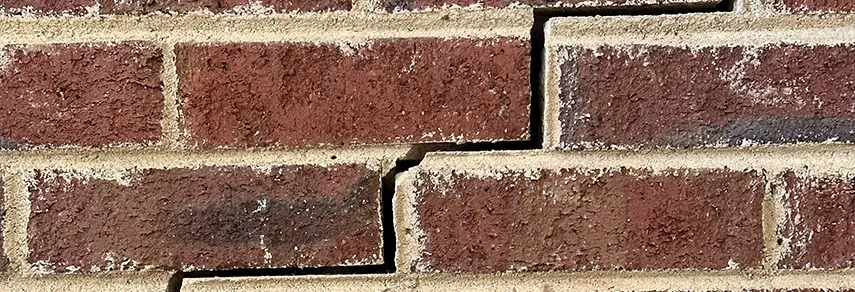
New cracks in a house that has stood for decades point to a change in the soil itself, such as erosion from poor drainage, clay shrinking during a dry spell, or tree roots pulling water out of the ground near the house. Our guide to what causes foundation settlement walks through those causes in detail. In a new home, the same crack may come from soil still adjusting to its first load, from fill placed during construction, or from the framing itself.
Fill Soil and Graded Lots Under New Construction
On a sloped lot, the ground has to be leveled before the foundation goes in. Crews cut soil from the high side, move it to the low side, and pack it down. That can leave one end of your house on undisturbed native soil and the other end on fill that was brought in when the lot was graded. The fill goes through consolidation of its own once the house is sitting on it, and the less firmly it was packed, the further it sinks. When one end drops more than the other, you get diagonal cracks in the walls and doors that stop latching.
Slab floors face the same issue on a smaller scale. North Carolina’s residential code requires the fill under a slab to be clean and compacted enough to support it evenly, and it caps how deep that fill can go without approval. If the fill was left loose in one spot, that part of the floor can sink while the rest stays put, leaving a dip or a crack you can feel underfoot.
Framing Shrinkage Can Look Like Foundation Settling
The framing lumber in a new house still holds moisture when the drywall goes up, and it shrinks as your heating and air conditioning dry it out. That shrinkage pushes nail and screw heads through the drywall, opens hairline cracks above doors and windows, and leaves gaps where the ceiling meets an interior wall. These problems are worst in the first year after construction, while the lumber is still drying.
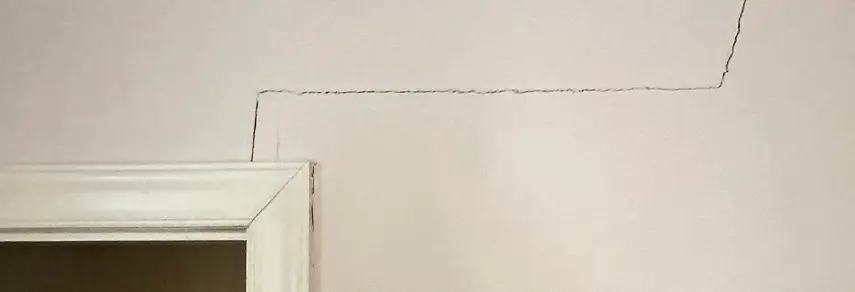
A hairline crack in your drywall can come from drying studs or from a foundation that’s moving. A shrinkage crack holds steady once the lumber is dry, while a settling crack keeps widening. Drying lumber affects only the drywall and trim fastened to it, so an inside crack with nothing matching it on the outside of that wall points to the framing. When an inside crack lines up with an outside crack on the same wall, the foundation is the more likely source.
Shrinkage damage is a finishing repair. A drywall finisher can reset popped fasteners and re-tape cracked joints, and once the framing has dried, those repairs have little reason to fail. If a crack reopens after a repair like that, have the foundation checked.
When New Home Settling Needs a Foundation Inspection
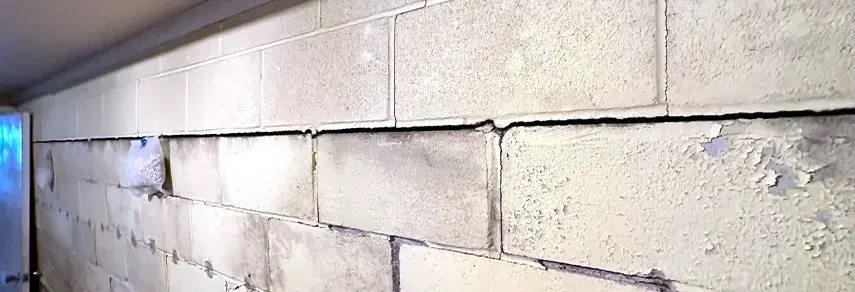
Settling that needs a foundation inspection keeps going after the framing has dried. Cracks in brick, block, or concrete get longer or wider, doors that worked fine start dragging, and floors develop a slope you can feel. Our guides to the types of home settlement and the cracks they leave and horizontal foundation cracks show what those patterns look like.
Take dated photos of each crack, and mark both ends with a pencil and the date so you can tell whether it’s growing. A tape measure laid across the crack in the photo gives you scale. If your home came with a builder warranty, check how long its structural coverage lasts. A record of changes made inside that window gives you something concrete to bring to your builder or a foundation inspector.

Get a Free Foundation Evaluation for Your New Home
Carolina Foundation Solutions has worked on foundations across North Carolina and South Carolina since 2002, and the inspection is free with no obligation. Bring out the photos and notes you’ve kept, and the inspector will use them alongside what they find at the house to tell you whether the movement needs repair and what the next step should be. Plan on 60 to 90 minutes, with you at home for the visit. Schedule your free inspection to find out where your new home stands.